Author: BRWC

  • Mickey 17 – The BRWC Review

    Mickey 17 – The BRWC Review

    Mickey 17 – The BRWC Review. By Daniel Rester. 

    Director Bong Joon-ho is finally back with a new film after his previous picture, Parasite (2019), won Oscars for Best Picture, Best Director, Best Original Screenplay, and Best International Feature Film; it was also nominated for Best Film Editing and Best Production Design. His latest is Mickey 17, based on the clever but slightly underwhelming sci-fi book Mickey7 (2022) by Edward Ashton. While I don’t see Mickey 17 getting Oscar gold in its future, it is a well-made adaptation by Bong that fits in with the other dark social satires in his filmography.

    Robert Pattinson plays the dimwitted and odd-voiced Mickey Barnes, who seeks to get off of Earth in the year 2054 after being unable to repay a loan shark. He signs up as an “expendable” with a crew heading to a planet called Niflheim in order to colonize it. Mickey is tasked with doing a number of dangerous jobs that could easily lead to his death. If he does die, a new clone of him pops out of an advanced printer so that he can continue his work.

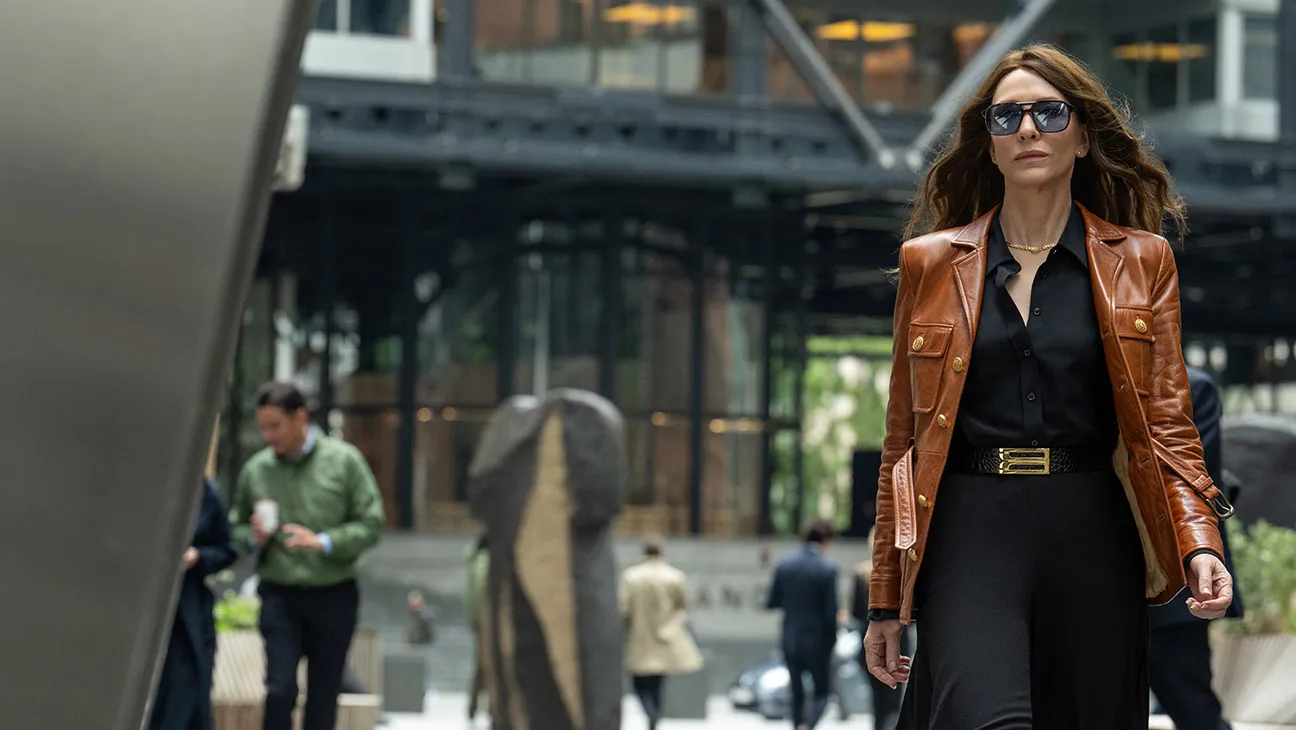
    While on Niflheim, Mickey spends time with his girlfriend Nasha (Naomi Ackie) and friend Timo (Steven Yeun) when he isn’t busy biting the dust for scientific research. He also has to deal with Kenneth Marshall (Mark Ruffalo), a failed politician who runs the colony. Marshall and his wife Ylfa (Toni Collette) have a cult-like following among some of the colonizers on Niflheim. 

    Things are going decently for Mickey, besides the constant dying of course, until he goes on a mission as clone 17. He is saved by a bug-like alien called a “creeper” while stuck in a snowy trench. Mickey 17 doesn’t make it back to the colony in time to announce his survival, so Mickey 18 is printed out. This is bad news for the two Mickeys as Marshall despises “multiples.” 

    While Ashton’s book has a lot of backstory and mostly focuses on the two Mickeys trying not to starve while splitting rations, Bong’s adaptation is more linear while also heading in decidedly different story directions. The film is both angrier and more cartoonish than the book as well, but it retains much of its humor and themes. It’s easy to see how Bong was drawn to the material as it shares similarities to his previous film Okja (2017), exploring people rebelling against the mistreatment of non-human creatures. 

    Much of the success of Mickey 17 is due to Pattinson’s eccentric and nuanced performances as 17 and 18. The former is a nicer version of the character while the latter takes the multiples situation less kindly. Pattinson explores the various characteristics of Mickey expertly, often with humorous body language. He offers perfect comedic timing as he navigates the film’s quirky narration too. 

    The supporting cast is having a good time as well, though none of them are on Pattinson’s level here. Ackie brings a lot of ferocity to Nasha instead of playing her as a standard love interest. Ruffalo and Collette chew the scenery a bit too much as the villains, and Ruffalo falls back on Trump-like behavior as an easy way into his character (Bong also has some of Marshall’s followers wear red hats). The two have one great scene involving a chaotic dinner though. 

    Mickey 17 is polished on the technical side as it captures its dystopian future. From the lava in recyclers to the crunchy ice in caves to the blocking of actors in cafeterias, Bong makes this sci-fi universe feel alive in every frame. He is aided immensely by production designer Fiona Crombie and cinematographer Darius Khondji, and the visual effects army at work. I never once doubted that I was looking at two Mickeys at once or centipede-like aliens or dirty spaceship interiors.

    Unfortunately the screenplay by Bong isn’t as strong as his direction this time around. The writing is unsubtle, dumb, and messy at times, working against other times when it finds a nice balance of silly and smart. Some of this uneven quality is directly lifted from Ashton’s source material, but some of it comes straight from Bong. The Ylfa character, for instance, isn’t even in the book and feels entirely unnecessary in the film; a weird dream sequence involving her feels clunky as well. I’m all for adaptations changing things in translation, but not all of Bong’s ideas come together smoothly.

    Bumpy writing and distracting supporting performances hold Mickey 17 back from sci-fi brilliance. The film’s visual excellence and Pattinson’s terrific work still make it very much worthwhile though. Just don’t expect Parasite levels of greatness. 

    Rating: 7.7/10

  • Daria: Review

    Daria: Review

    Daria: Review. By Christopher Patterson.

    A Spinoff of Beavis and Butt-Head. It’s called Daria. That Daria

    Not much of an introduction here. That’s all you need to know.

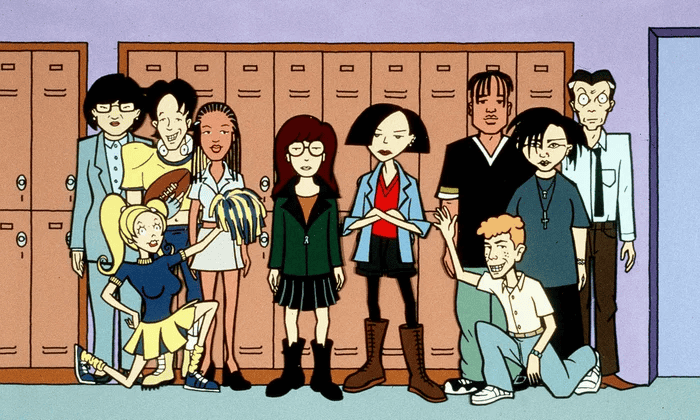
    Daria would be the review. How her character is handled and developed, and where else to start than the point of her character. And how that point has been obscured from their etymological origins.

    A sorrowful fact about she is that many fans took a fallacious message. That Daria is an example rather than another consequence of an entirely discourteous system. Daria clutches on her individuality to a point that leads her to act out, portraying herself as a too-ahead teen as a shell. In reality, she is too shy to open herself up, to be traditional. It’s a tragedia that can be observed as a commedia. The show recognizes the ridiculousness of how we base ourselves as a trope to avoid tropes. Yet, to someone easily influenced, what the view of another’s room appears to be is to be rather than cusping the overtone.

    What made Daria adequate is what every so-called Daria will detest to tell you. She is veracious, sanctimonious, execrable, and a hypocrite.

    Daria being the forward-thinking blockhead was what made the show so pristine but so impressionable. It’s so facile to consider Daria the morally correct friend in the group, but it’s nearly as uncomplicated to see she’s not. She is never as equitable as she thinks she is, but she is not as erroneous as on first viewing. She is right since everyone around her are purposeful ludicrous clichés. Even so, she is not unerring. If she conversed with an operating individual, she would be rewarded a reprimand. Which works, as she is a dazed and confused teen, as much as she would loathe that. But that’s the point.

    She is a teen who is kind of right but who you kind of should not be. She is rude to everyone as she idiotically deduces she is too real for them. She is the unhelpful, reasonable person in the unreasonable room. A party pooper, but a needed one for the audience and Daria herself. 

    The show serves as a refreshing critique of the 90s and Daria herself. It openly peels apart 90s youth and boomer parents but also reaches for understanding in a time when comprehension and lecturing were one and the same sentence. It actively succeeded in moving towards a better future while critiquing those who do, such as Daria. While effortlessly denouncing the problems of the world, she never takes the time to comprehend how others think and ameliorate herself. 

    The best joke in Daria is seeing Daria be Daria. While she accurately diagnoses others, she does it in vicious ways that make no change. Seeing a problem doesn’t solve it; actively cleaning the wound does. Take Jodie, the best character in the show. While she casually spends her days actively critiquing America, Jodie spends hers knowing the obstacles and pushing through it. She feels lost like so many teens, being forced to be excellent but still making the best out of a bad situation through relationships. Yet to Daria, Jodie can be written off as someone superficial enough to join the clubs and put in the effort while ignoring everything that put Jodie in that position. This is not even mentioning she doesn’t need a reason to do the things she does. Why can’t we as humans have fun? That is the question, Daria. To put it another way, Daria is a hater, through and through. And this is so exceptional cause the writers know that. 

    Where it could’ve failed is if this self-awareness wasn’t present. Easily, Daria could’ve fallen prey to the white feminism that plagued the time. Rather than what we got, Daria could’ve not had the nerve to challenge Daria’s fundamentally privileged and unsupportive beliefs.

    What’s incredible is that in the 90s, these writers came together and made an unfeigned uplifting show that holds up nearly thirty years later. Rather than moralizing, it’s healing. Daria makes you realize you are not so different from anyone, and we all get stuck in the positions we do for many reasons. Instead of complaining, Daria calls for fighting for what you believe in, through and through. While it can be a pleasure to critique the absurdity of corporate America, evenly enjoyable is to make friends while it lasts, and that is what Daria is. A good time.

    Even though the show was more than adequate, that doesn’t exclude mediocre segments. If you take my word for it, skip the later seasons and binge the first two. While I appreciate all of Daria, it’s not hard to notice the characters wear thin. Issue: Daria, like the characters, never really matures since no one especially grows. This drawback may be the most immense virtue Daria has. Teenage angst, folks.

    An unconventional and wholly absorbing facet of Daria is how it tackles teenage angst. Doesn’t smell like teen spirit, or does it? That is the question. As I see it, it re-invents angst as Daria is the socially aware teen two decades behind when that became a motif. And while that can be no more correct, I moreover disagree with seeing it fully this way. I am more comfortable assuming the show attempted to slaughter teenage angst by putting the complete reverse on screen. Rather than Angela from that so-called life, who is perceptive and a complete mess everything everywhere all at once, Daria is purely perceptive, but to an idiosyncratic stage. A trope she created, but a trope that may not fall under angst, instead maturity.

    Even if the show takes time to poke holes in this self-inflicted and self-inclined mind, it’s hard to deny the show doesn’t take its jubilation in indulging her grandstanding. But wouldn’t Daria being a teen make that angst, for the spirit that lives inside alone? 

    Even if being a smart aleck was the new angst, this unchanging attitude does have its problems. Primarily, making the show monotonous as it goes on. Aside from her, nobody in the cast really evolves which works for a couple seasons, before becoming tiring. This makes Daria a show that tries to be stuck in-the-moment but ends up always stuck-in-the-past. But aside from the characters, why is Daria so unvaried?

    It is a repetitive show since it relies too much on its premise. Daria is a know-it-all teen in a too-behind town, but what else? It’s why she can never be referred to as a trailblazer. Since the pilot is principally all it contributes. A candidly veracious teen in a fallacious town. Runs trite with time. The slight anomalies where the series breaks new terrain are a handful and rigorously inadequate.

    On top of these predicaments, she is never given enough substantial conflict to deal with. The Daria of season two is the Daria of later, with just a tad more knowledge. The only exceptions are few but notable. Nonetheless, this can really make chunks of the show feel uninteresting. As if the show depends on a formula rather than reinventing itself with time.

    VERDICT

    Regardless of innumerable complaints, this show was an era-defining show that was better than it ever had to be. It could’ve been the forgettable 90’s angst fest taken up by what it denounces. It could’ve been an agony of nostalgia. Instead, it was a perfectly imperfect representation of a chaotic decade for TV and a shifting country. The more our country evolved, the more things started to smell like Daria spirit. If it did anything, it surely did that.

    3.5/5 

  • Homegrown: Review

    Homegrown: Review

    Homegrown: Review. By Robert Ewing.

    On January 6th, 2021, an insurrection occurred in the United States of America that sent shockwaves worldwide. Many news outlets and left-wing politicians condemned what occurred. Even controversial right-wing commentator Ben Shapiro declared it to be an insurrection and the worst thing to happen in America since 9/11, but ultimately, to appease the right-wing hivemind, his views of that fateful day have changed. Homegrown, the latest documentary by insert name, ponders what led us to that day. What occurred in the lead-up to January 6th that made thousands of people storm the Capitol building? A true nightmare of an experience, Homegrown is a film that, as every minute passed, I hated what I saw unfold, and it’s utterly brilliant because of it.

    We follow three “true patriots” and members of the Proud Boys. Chris Quaglin is a soon-to-be father from New Jersey, Randy Ireland, an air force veteran rallying like-minded conservatives in New York and Thad Cisneros, an activist in Texas, who wants to work with Black Lives Matter to bring unity. We follow these three men as they preach and garner support for Donald Trump in the lead up to the 2020 election and see the aftermath once the election is called. They believe their country is being stolen from them by the democrats, leading to the insurrection on January 6th,2021.

    Chris and Randy are the embodiment of I’m not racist, I have a black friend, with Chris it’s appropriate to say I’m not racist, my wife is Chinese. They are walking contradictions, saying one thing but doing another. Chris vandalises the Black Lives Matter mural that was on the road outside Trump tower, and reps apparel branded with Blue Lives Matter, but claims he is not a racist. Randy, when proclaiming the election is being stolen, he is called out for his anti-democratic and debatable authoritarian stance. He scolds this person that his grandfather thought against the Nazis and then him and his cronies harass and assault someone while police watch on and do nothing.

    Thad is an individual who was swept up by right-wing politics, as he believed it provided him with value and a sense of community. Anyone can become engrossed when we encounter like-minded individuals; however, there will eventually be a turning point where you are either on the party train or cast off for not being aligned. Thad wishes to collaborate with Black Lives Matter because he recognises the injustices occurring and desires to create unity, to be someone who does the right thing, and to enact societal change. However, will the rest of the Proud Boys accept this, given that they oppose progressive groups like Black Lives Matter?

    Throughout the film’s runtime, I was on the edge of my seat due to the sheer horror that unfolded. Homegrown is scarier than any horror film I have ever seen, as these individuals exist and are voting. Particularly in 2025, as we are not even two months into Trump’s second and hopefully last term – unless his “jokes” about a third term shift to attempts to amend the constitution – which has been filled with hatred and a shift towards authoritarianism, brewing since before the insurrection and perfectly showcased in Homegrown.

    Michael Premo genuinely placed himself in uncomfortable and perilous situations to capture the footage we see in this documentary, particularly regarding the day of the insurrection. Observing Chris and other “true patriots” attempting to overturn the election will leave you in utter disbelief. Michael Premo illustrates all the insurrection’s grim realities, from individuals assaulting police officers as they attempt to storm the Capitol building, to those being pepper-sprayed by police, to individuals who were tragically injured during the violence. However, the true nightmare and ultimate hypocrisy emerges when we consider the fact that Donald Trump pardoned everyone arrested and convicted due to their actions on January 6th. Chris respects the boys in blue as long as they are not obstructing his coup, just as Donald Trump espouses law and order but will pardon those who assaulted police officers and attempted to undermine democracy.

    However, the biggest question I constantly ask myself was, why was Homegrown? What were the intentions behind this project? If it is to showcase the hypocrisy of these true patriots and how this led to January 6th, or is it trying to understand why they feel this disillusioned with their country? If it’s the former, I think it is an incredibly accurate and haunting picture of today’s America. If it’s the latter, it could be viewed as a distasteful film trying to bring understanding to hateful people and showcasing their toxic views. I believe it’s the former, but I still wonder if that was the intention.

    Homegrown, if viewed as a showcase of the hypocrisy and the hateful intent of the Proud Boys and how good intention people can be swept up into right-wing ideologies, it is a truly horrifying portrayal of what should have been America’s past but is now its present again—a film I will never watch again but a film worth experiencing.

    4 Stars

  • Misericordia: Review

    Misericordia: Review

    Misericordia: Review. By Robert Ewing.

    French cinema will always hold a special place in my heart. In high school, my French teacher would show us various kinds of films like Goodbye, Children, Les Choristes and Three Men and a Cradle. Already having a love of foreign cinema after watching a very low-quality upload of Battle Royale on YouTube, high school expanded my love for the genre and my French teacher did play a part in it. When heading into Misericordia,I was excited as a French and in extension European cinema is very distinct and calling Misericordiadistinct would be an understatement.

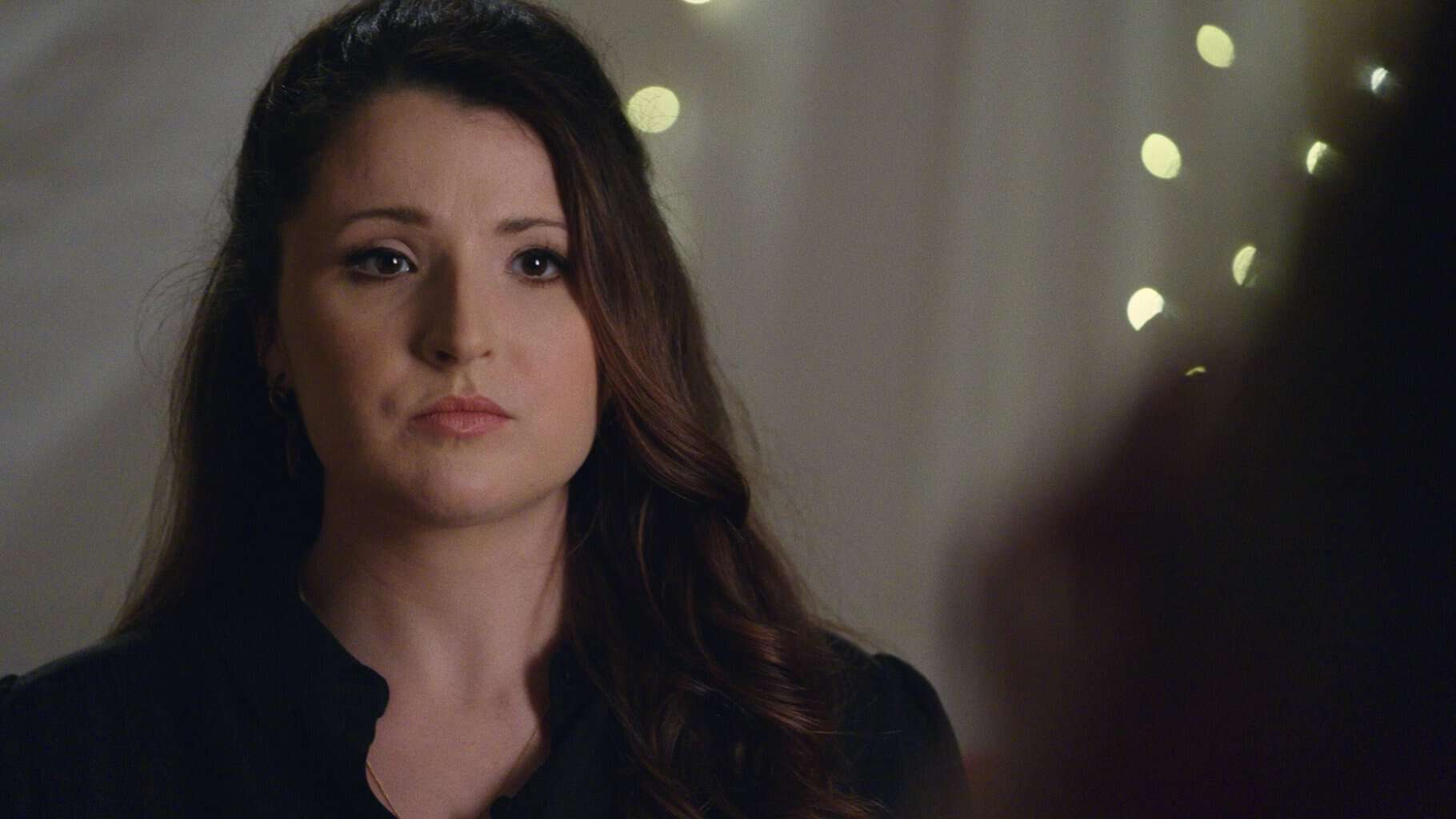
    We open on Jérémie (Félix Kysyl) as he is travelling back to his hometown of Saint-Martial. His former boss, whom he had an affection for, has passed away and has come back to attend the funeral. While back he decides to stay a few days with widow Martine (Catherine Frot), which angers son Vincent (Jean-Baptiste Durand) who believes he is only there to get with his mother. However, what should have been a normal time away from home turns sinister as Jérémie is caught up in a disappearance, a threatening neighbour and a priest (Jacques Develay) with suspicious intentions.

    What starts as a normal story of an unwanted visitor with potential sinister intentions slowly morphs into a very bisexual story of connection. We see, throughout the film, Jérémie trying to get with everyone in the cast, apart from Vincent. Everyone wants the desire to be loved, but you cannot force that emotion and throughout Jérémie has an unnatural connection with people he is somewhat attracted to. It leads to a narrative that audiences may gravitate to, however, I found it to be ultimately strange.

    Even then, the mystery around the disappearance is lacking a key element for the plot to truly work, which is an actual mystery. The film is told entirely from the perspective of Jérémie, so we know what happened and the suspense is meant to come from the never-ending lies told that only sink him into a deeper and deeper hole. Ultimately, though, this just never works, taking itself too seriously to be darkly funny, it just leads to a narrative beat that is boring to watch. When the priest slowly reveals his true intentions, it’s when the film becomes something truly special and enjoyable to watch.

    Rising above the mediocre story is the acting. The entire cast is great and elevate the material to an extent that is at worst watchable, to its best is engaging. Félix Kysyl is fantastic as Jérémie, delivering a unique performance of a confused man lost in a wide and open world who can let his evil intentions take over. Catherine Frot as Martine is also great, as a kind and supporting widow, who knows about Jérémie’s affection for her husband but never shuns his thoughts, instead coming from a perspective and understanding and love.

    Misericordia could have been something unique and engaging to watch, instead it’s just a mediocre and true missed opportunity to tell an interesting story. Some moments are captivating, and the acting is truly stellar, but it doesn’t do enough to make the film a worthwhile experience.

    2.5 Stars

  • Baggage: Review

    Baggage: Review

    Baggage: Review. By Robert Ewing.

    We all carry baggage, and while it is not always literal, the mental strain of our thoughts can be just as intense as hauling a heavy suitcase through an airport, only to be told it is too heavy and you need to remove some of the items into your hand luggage. It is all too relatable, which is why the animated short Baggage works so well, created by Aardman Academy alumna Lucy Davidson. Baggage is a delightful short film that holds a truly poignant message at its core.

    We open on three girlfriends as they check in their baggage at the airport, we see two of the girlfriends are in sheer glee, excited to get away. Hopping onto the scale and being under the limit, they swoop away onto the conveyor belt to go through security. However, the final girlfriend might be carrying a bit more baggage than her friends, which she will have to tackle head-on as she goes through security.

    Baggage possesses a unique visual aesthetic; the crisp black and white colour scheme is simply stunning. Every frame bursts with life yet never feels muted, thanks to the exclusive use of shades. I feel the combination of black and white works exceptionally well, enhanced by the utilisation of cardboard in its character and world design. The use of cardboard is genuinely distinctive; it imparts a child-like innocence to the short, which I feel perfectly complements its more mature storytelling.

    At its core, the short film explores how we, as individuals, carry unnecessary baggage that is not so easy to unload. Whether it pertains to our dislike of our appearance, scent, or how we perceive the work we produce, many of us struggle with these feelings. I often panic over my work as a critic, convinced it does not meet a good standard and is truly lacking. However, that is not the case; that is merely one piece of mental baggage weighing me down. It’s easier to recognise this than to confront it. The short film conveys this idea well, as you cannot simply remove your unnecessary baggage as if it were a prohibited item you cannot carry onto a plane.

    Baggage is a visually distinctive and delightful film. It uses animation effectively to tell an engaging and meaningful story that anyone can relate to. Clocking in at only five minutes, it uses every second perfectly, leading to a fantastic short.

    5 Stars