Author: BRWC

  • B Is For Bachata: Review

    B Is For Bachata: Review

    B Is For Bachata: Review. By Robert Ewing.

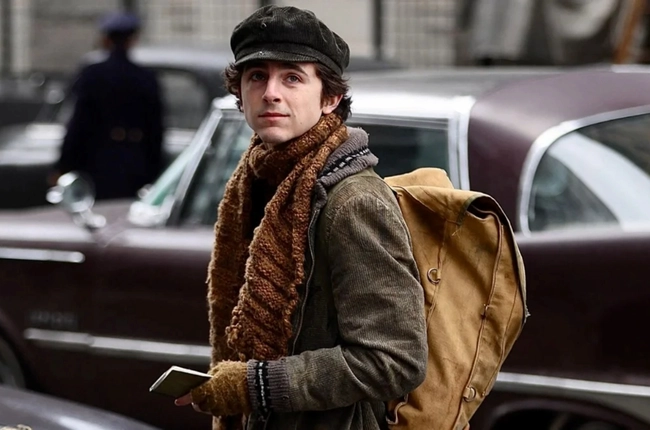
    Culture plays a huge role in our identity, particularly for first-generation immigrants who bring aspects of their heritage with them, linking them back to their home country. However, as they have children and grandchildren, the newer generations of immigrants adopt elements of their new country’s culture and integrate it into their own. At some point, there is a genuine possibility that they lose their connection to their heritage and fully embrace the new culture. B Is for Bachata addresses this theme and so much more in a somewhat uneven short film.

    The film opens at a party; it’s Yonathan’s (Andresito Germosen De La Cruz) graduation, and we see his family attending, making the celebration distinctly Dominican. Dominican music plays in the background, and people dance to it. This prompts Yonathan to confess to his cousins, Manny (Franceli Chapman) and Beatris (Cesar Pichardo), that he has never danced Bachata before. This leads to a discussion about the significance of the music and dance in their culture, as well as its importance to their family lineage.

    While B Is for Bachata appears quite simple on paper, its presentation is rather chaotic. Many intriguing editing choices confuse rather than having a natural flow from shot to shot; the short could more accurately be described as over-edited. This disarray in the editing causes the narrative to feel scattered. One moment, the characters are discussing Yonathan’s lack of dancing ability, and mere seconds later, the conversation shifts to the significance of music. Although it certainly has a great deal to convey within its 13-minute runtime, I feel it attempts to achieve too much. I wish it focused on a handful of elements executed well, rather than an array of themes that are poorly explored.

    It is disheartening to express this, as the themes emphasising the importance of culture and the necessity to preserve it across generations are indeed meaningful. One can sense that writer and director Ricky Rosario intends to convey this. However, it becomes obscured amid the myriad of other narrative elements, such as cultural appropriation, the history of the music, and the family’s connection to Bachata, which ultimately diminishes the true impact of the film by its conclusion.

    B Is for Bachata had the potential to be a poignant and significant short, yet ultimately, it ends up feeling rather messy. The experience of navigating through so much erratic editing results in a disappointing short that is brimming with potential.

    2 stars

  • Just In Case: Review

    Just In Case: Review

    Just In Case: Review. By Robert Ewing.

    Bipolar disorder is a serious mental health condition that I feel has never been accurately portrayed in media. Silver Linings Playbook is a notable example of depicting bipolar disorder, but even then, the film faced heavy controversy over its portrayal of mental health. So, heading into Just In Case, I was intrigued to see how it would depict bipolar disorder, especially as it is written by and stars April Kelley, who has bipolar disorder. I knew this film was coming from a place of authenticity to portray what it is like to live with this condition accurately, and it ultimately achieves this goal by masterfully using the art of filmmaking.

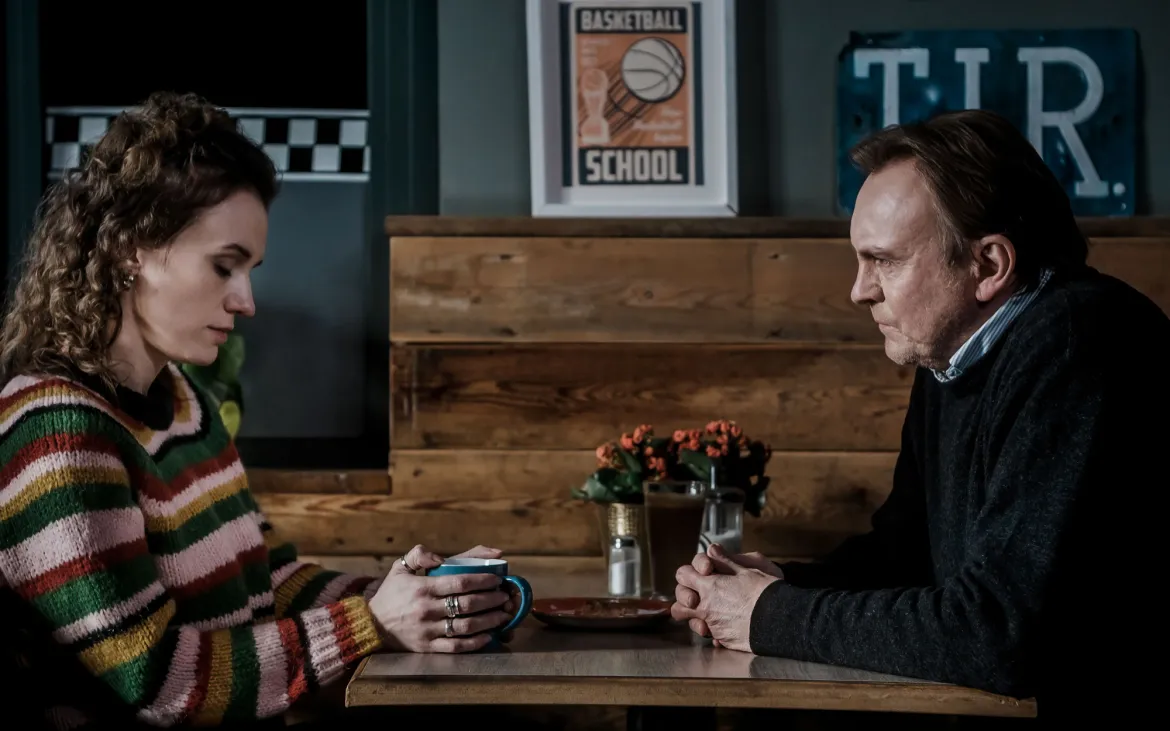
    We open on Mark (Philip Glenister) and his daughter Rachel (April Kelley) as they drive and stop at a service station for a cup of tea and a chat. Mark wants to ensure his daughter is doing well, how he can help, and come to an understanding of what she feels. Rachel details how this helps her and expresses her goal of making it to 30. However, as Rachel talks, a ringing sound occurs, and when Mark goes to get Rachel another drink, something shifts. Rachel begins to discuss that she has written a “just in case” letter for when what she is going through becomes too much to bear.

    A fundamental concept of filmmaking is the 180-degree rule; to put it simply, the camera should remain on one side of an imaginary line between two characters. Staying on the same side allows for a consistent spatial relationship and prevents the audience from becoming disoriented. Just In Case breaks this rule, which does disorient you, yet it perfectly captures how Rachel feels, and the mood swings associated with bipolar disorder. What begins as a decent conversation about Rachel’s mental health suddenly turns dark and centres around suicide. It is emotionally impactful and accurately depicts how someone with bipolar disorder may perceive the world.

    Filmmaking aside, April Kelley and Philip Glenister are superb as Rachel and Mark. They feel like real individuals engaged in an uncomfortable but necessary discussion. You are truly captivated by their performances, allowing the emotional beats to resonate profoundly. This is further amplified by April Kelley’s exceptional writing; every line of dialogue is impactful and contributes to the accurate depiction of bipolar disorder.

    Just In Case is a genuinely remarkable film that is powerful. It packs so much into a 14-minute runtime, showcasing extraordinary performances, writing, and filmmaking. Just In Case is a must-watch short film.

    5 Stars

  • Retirement Plan: Review

    Retirement Plan: Review

    Retirement Plan: Review. By Robert Ewing.

    When I write this review, I am 25 years old, and 26 is fast approaching. Time moves at lightning speed; January feels like it was just a week ago, and my trip to Toronto for TIFF seems like it was a month ago. Although I am still far from it in theory, it won’t be long before I must consider retirement. However, I have no idea what I want to do when I retire; I can barely imagine owning a house in my 30s, let alone what I will do at 65 plus. Retirement Plan, an animated short by John Kelly, explores what someone might do with their life once they retire, yielding interesting results.

    Retirement Plan follows Ray (voiced by Domhnall Gleeson) as he outlines his retirement plans, ranging from simple tasks like clearing up his computer’s desktop and reading unfinished books to trying drugs for the first time or travelling. Yet, as he shares his aspirations, Ray ages, and what once seemed magnificent, and freeing may not live up to his expectations.

    Its animation style is simplistic in its approach; from its line work to its colour choices, the images are not necessarily flashy, but that is intentional. Retirement is a time when we are meant to relax and enjoy the fact that our working days are behind us. Life should be simple, but retirement comes with its flaws. As we age, our bodies begin to fail us; what once were simple tasks, like washing and changing our clothes, become arduous chores.

    However, my biggest issue with the film is that I felt nothing; I was emotionless while watching it. Watching Ray age and draw closer to his final days didn’t evoke sadness in me; I sat with a blank, expressionless face. Domhnall Gleeson excels as the voice of Ray, bringing a true range of emotion to the role.

    Retirement Plan was a pleasant experience. I don’t regret watching it, as the animation is truly unique and pleasing to view, but at the same time, I did not feel I gained much from it on a narrative level.

    3 stars.

  • Do This For Me: Review

    Do This For Me: Review

    Do This For Me: Review. By Robert Ewing.

    The loss of a loved one is something we all experience, and how we deal with that loss will always be unique. There is no right or wrong way to cope with loss; however, there is so much to comprehend when we lose someone dear to us. Did they know how much I loved them? Could I have done something to change the outcome? Were my final words the ones I wished to say? It is a lot to tackle alone but having friends and/or family by our side can make it easier. Do This For Me tackles this idea head-on and is a meaningful short film.

    We follow a group of friends—Lex (April Kelley), Gracie (Sara Huxley), Beca (Taj Atwal), Kat (Tilly Keeper), and Joy (Adelle Leonce)—as they gather one night to pay tribute to a friend they recently lost. They do this by recording messages about how much their friend meant to them. However, as the night progresses and the drinks start flowing, grief takes over. Despite the rising tensions, the friends remember why they are there: to support the people they love.

    Written by April Kelley, the script is dense with meaning and purpose. However, especially at the beginning, I felt a bit lost regarding why they were recording videos. It eventually clicked who they were referring to, as I initially thought they were talking about Lex rather than a recently deceased friend. Once the confusion faded, the emotional core of the film truly resonated and was impactful—especially Lex’s moment discussing the loss and its effects on her. It is emotionally charged and may bring a tear to the eye; the entire moment when she speaks of saying “I love you” is genuinely powerful.

    The friendship group also feels organic and real, and all the performances are wonderful. Seeing Tilly Keeper in a new project was a delight, as the last time I saw her on screen was in EastEnders. April Kelley is also incredible as Lex, bringing an emotional range from survivor’s guilt to utter sadness. The group exhibits true chemistry, making them believable as a circle of lifelong friends or “lifers,” as they are described.

    While it took a while for it to resonate with me, Do This For Me is an emotional narrative centred on loss and coping with grief. Featuring stellar performances and powerful thematic ideas, Do This For Me is nothing short of great.

    4 Stars

  • Black Bag – The BRWC Review

    Black Bag – The BRWC Review

    Black Bag – The BRWC Review. By Daniel Rester.

    Director Steven Soderbergh and screenwriter David Koepp previously teamed for Kimi (2022) and the recent Presence (2025). They’re back together again for Black Bag, a much larger project than those previous two films. While Kimi and Presence cost under $6 million to make combined, Black Bag is a star-led spy thriller with a budget of $50 million. It’s proof that after 36 years in the business, Soderbergh is still able to navigate through different genres and budget levels while making it look effortless. 

    Black Bag features Michael Fassbender and Cate Blanchett as George and Kathryn, a married couple who work for the same British intelligence agency as spies. In order to keep their marriage working, they must use the phrase “black bag” whenever they can’t discuss aspects of their assignments with one another. George is informed that a dangerous software called Severus may have been leaked, and that he is to investigate five co-workers who are suspects. One of them is Kathryn. 

    The other suspects are Clarissa (Marisa Abela), Freddie (Tom Burke), Zoe (Naomie Harris), and James (Regé-Jean Page). Clarissa and Freddie are together, while Zoe and James are also a couple. The four of them and George and Kathryn all work under department head Arthur Steiglitz (Pierce Brosnan). These seven characters test each other’s skill sets and lies as George tries to pinpoint who the culprit is. 

    Soderbergh’s latest plays like a workplace drama with elements of Mr. and Mrs. Smith (2005) and Tinker Tailor Soldier Spy (2011). The director keeps things brisk and efficient as he navigates Koepp’s tight and dialogue-driven screenplay (which occasionally gets tangled in the details and reveals). While Black Bag is a spy thriller, it contains very minimal action, instead relying on character relationships and tense situations during its compact 93 minutes. 

    Fassbender and Blanchett could play ice cold killers in their sleep. The two don’t just show up for paychecks here though. They bring subtle menace and charm to George and Kathryn and make them a believable couple. Though these characters take their work seriously, their marriage has strength and love running through it that the two would die for. They may be cold spies to others, but at home they are a loyal team. 

    The rest of the cast is fun too. Abela has perhaps the showiest role as Clarissa. She’s a sexy, clever, and slightly unstable character. Abela helps bring spark to a handful of scenes that could have been too dry otherwise. 

    Soderbergh, who also shot and edited the film, makes Black Bag polished without ever being overstylish. The film opens with a long and smooth tracking shot that is unbroken, but Soderbergh also knows when to cut with precision in other scenes. Those include a suspenseful dinner scene that occurs early on and a sequence involving multiple people facing a lie detector test. 

    Most of the scenes contain a warm and soft orange glow to them through the lighting, but the scenes in Zoe’s office are harshly bright with natural white light. Those scenes also tend to drag on as Zoe, a therapist, works with her patients. While most of Black Bag is well-crafted, Soderbergh should have taken another look at those particular sections.  

    Black Bag is a smart spy thriller that plays like a suspense novella for adults. It isn’t for those looking for razzle-dazzle action and wild gadgets. Soderbergh, Koepp, and a terrific cast deliver a grounded take on the genre that’s an entertaining addition to the recent Soderbergh-Koepp collaborations.  

    Rating: 8/10