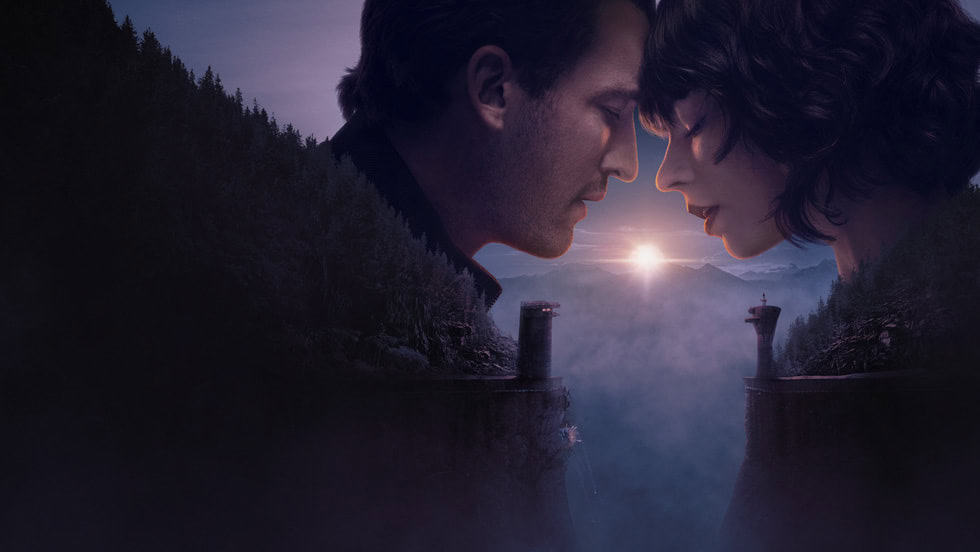
“Nickel Boys,” based on the Pulitzer Prize-winning novel by Colson Whitehead, is a heartbreaking, powerful and unconventionally shot film set in the 1960s about Black teens at a brutal Florida reform school named Nickel Academy who endure unspeakable mistreatment yet show perseverance amid challenging circumstances. The so-called “reform school” is based on the actual Dozier School for Boys in Tallahassee where the remains of almost a hundred children and teens have been discovered.
The film starts out with promise for Elwood Curtis (Ethan Herisse), whose high-school teacher sees in him a bright future at a technical college, which he encourages him to pursue. Elwood is being raised by his grandmother Hattie (Aunjanue L. Ellis-Taylor in a warm-hearted performance), who is generous with her love and support. One day when Elwood hitches a ride from an African-American man to head out to the school, the driver gets pulled over by a white officer because the car is stolen. Since Elwood is in the car, he is in essence an accessory, and this being the time period it is, he finds himself in trouble with the law and thus gets sent off to the reform school.
There is a clear racial divide of privilege and treatment at Nickel Academy between the Black students and the White ones. At Nickel, Elwood finds an ally in Turner (Brandon Wilson). Turner is the more opportunistic and cynical of the two, explaining to Elwood what he can expect and how to work within the system. As the film goes on, the two form a support system determined to challenge the status quo.
As impressive and involving as the movie is, what did not work for me is Elwood’s grandma looks like she could have been his mom’s age. Also, the way the movie was shot (first-person perspective) was distracting and felt gimmicky. I found the scenes with outer space images, while attempting to set the tone of the time period, to be superfluous.
The performances by the young actors, Herisse and Wilson, are quite good and powerful, with a rawness and openness that adds to their effectiveness.
We come to really care about the characters and the film immerses us in the time period, letting us see the injustices and the way of life that was.
Life is not perfect. Every minute of every day, we do something that we wish we could have done better or wished we were in pursuit of our dreams rather than being stuck at a depressing 9 to 5. Sometimes, though, for us to achieve our goals, we have to make a sacrifice. You could view life like a Tomato plant; we try to achieve a goal like a tomato plant tries to grow a tomato, and sometimes we fail, and we must try again like a plant growing a misshaped or bad tomato but sometimes things go to plan, and we achieve our goals the plant has grown a perfect tomato. This thematic concept is at the core of The Perfect Tomato and leads to a short film that is simply great.
We open on Nacho (Eligio Meléndez) and his granddaughter María (María Fernanda Ayala) while they attend to tomato plants. Nachois a farmer and brought María to work; however, she is more interested in harvesting the tomatoes than taking care of them and letting them grow. After the day’s work is complete, Nacho and María head home, and Elena (María Meléndez), María’s mother, is working on her clay pottery. Over dinner, Elena gives the good news that an old friend wants to invest in her clay and open a store with her. However, this opportunity means Elena and María would have to move to the city.
The Perfect Tomato is a story about how we must care and let things grow in our lives, as the true prize for letting this happen is an amazing moment in our life. Elena struggles with this, thinking that nothing has ever gone right in her life and asking when that moment of happiness will come. Nacho deals with another aspect of achieving goals, which is sacrifice. Being pestered to take a management promotion, Macho wants to work the land as he has always given to the land, so the land gives back to them.
It has a meaningful message that is truly universal, and what allows the narrative to work is the strong performances. Eligio Meléndez and María Meléndez as Nacho and Elena respectively are wonderful. Delivering real and down-to-earth performances that are utterly spellbinding.
The Perfect Tomato is a wonderful short that uses its entire 18-minute runtime to tell a meaningful message that is relatable with wonderful performances, and it is simply endearing.
Marion (Caroline Noguès-Larbère, playing a semi-fictionalised version of herself), the only female bull-jumper in France, is minutes away from her debut. As they stand at the urinal, even her fellow jumpers —those upon whom Marion depends in case things go wrong— voice their doubts, scoffing at the prospect of babysitting her in the arena, entirely unaware of Marion’s presence.
And even with such an occasion looming, Marion’s ex-partner hurriedly arrives with their young daughter, Emilie (Chloé Bugard), and forces her upon her mother. Even after showing adversity in the face of misogyny, Marion isn’t relieved of the self-sacrificial expectations imposed upon mothers. Leaving her daughter in the changing room to pray for her safety and to be away from the spectacle, Marion steps into the arena, and so begins the show.
Written and directed by duo Joe Weiland and Finn Constantine, Marion is a compact, impactful story of resilience. Beautifully shot, the short shines a new light upon a controversial sport, blending reality with fiction, capturing the hair-raising acrobatics and stuntwork practiced by bull-jumpers. Though not quite a documentary and containing some fictionalised exchanges, one overarching theme is unshakeable, and inescapably real; the crushing onus forced upon women to be selfless, even when it’s their moment.
Lord Of The Rings: The War Of The Rohirrim – Review. By Robert Ewing.
Anime based on Western media is not a new or revolutionary concept for anime fans. For years, anime has inspired and influenced Western filmmakers like The Wachowskis, Christopher Nolan, and Darren Aronofsky, so it was only inevitable that the West would start looking East to see how anime could influence their media. We saw this with The Wachowskis with The Animatrix, Star Wars with the anthology show Visions, and Cyberpunk 2077 with Netflix’s Cyberpunk Edgerunners. All those pieces of media are widely different, spanning various animation studios and creators, but there is one thing that connects them all. Japanese influence. All those anime are inherently Japanese, and it feels like they could only be made by Japanese creatives. Therefore, it is disappointing when the latest example of Western-based anime, The Lord of the Rings: The War of the Rohirrim, feels inherently Western to its very core.
Taking place 183 years before Frodo and the fellowship set off on their journey, we follow Hera (Gaia Wise), daughter of the King of Rohan Helm Hammerhead (Brian Cox), after the accidental death of Lord Freca, who was trying to stop the marriage of Hera to a Lord of Gondor. Freca’s Son, Wulf (Luke Pasqualino), promises revenge on the entire family and is banished from Rohan. After many years of being presumed dead. Wulf returns with an army he has built from the Hill people to enact his revenge and take over Rohan. It is up to Hera to stop this impending destruction of her and her people.
Even though the film takes place 183 years before The Lord of the Rings, The War of the Rohirrim constantly makes you aware of the coming dangers nearly two centuries away. Whether it be a growing army at Isengard, Orcs scourging for rings for an unnamed master, or even the Battle of Helm’s Deep. It was a strange feeling for an anime to tackle what Western filmgoers would describe as fan service, as anime fan service is not the same thing. It so heavily relies on the already established narrative by J.R.R Tolkien and the visual and musical aesthetics of the Peter Jackson trilogy that anything original in this film feels uninspired.
Even then, the animation looks strange. The background art and the character designs do not mesh well. The characters feel separate from their backgrounds, never feeling like they live in the world they inhabit. Even then, the film is just not visually appealing. From dynamic camera movements that takes away from the momentum of the action. To faces in certain shots not being highly detailed in wide shots. Even Héra’s character design is not in line with the rest of the world. She is the closest to what I would say would be a typical anime character design with thigh-high guards, resembling how anime girls would wear thigh-high socks.
The performances are decent though Brian Cox does a commendable job as Helm Hammerhand, the current king of Rohan. You believe that he is a truly headstrong king for better or for worse. Gaia Wise is also solid as Héra, while the script around her character is lacklustre, she does a solid job with what she is given. However, Luke Pasqualino gives a rough performance as Wulf. Especially as the main villain he has no presence and there is nothing sinister about him. Wulf just comes across as someone who didn’t get his way so went into a huff.
However, my biggest issue with the film is that it feels ashamed to be an anime film. It is trying so hard to be a film it is not. In my opinion, Warner Brothers wanted this to be just an animated TheLord of the Rings film and not an anime The Lord of the Rings film. It’s a small distinction, but it is huge in its implications. Anime has been written and directed by non-Japanese filmmakers with Tekkonkinkreet (Dir: Michael Arias) being a notable example however that was based on a manga, so its core store was created with Japanese influence.
This is not the same with The Lord of the Rings: The War of the Rohirrim. It’s based on source material and written solely by Westerners. It leads to the idea that this film feels like a studio-for-hire project instead of a passionate tale for Japanese filmmakers to explore the realm of Middle Earth which is a disappointment. Even then, it fails to be an engaging The Lord of the Rings film. For a film that is only two hours and fifteen minutes. It feels agonisingly longer than Return of the King.
I adore anime and I would have loved The Lord of the Rings: The War of the Rohirrim to be up with the likes of Cyberpunk Edgerunners. However, it is just a bad film. Ashamed of being an anime film and not interesting or fantastical enough to be a decent The Lord of the Rings film.
The rise of fascism and far-right ideologies are becoming overly commonplace in mainstream news headlines. Whether it be Donald Trump making remarks about Canada becoming the 51st State of America or the marital law incident in South Korea. Seeing world-changing events and hearing horrible rhetoric is genuinely scary and nerve-wracking. Although, this could be viewed as history repeating itself for older generations. Solvent focuses on the horrors of the past, mainly the actions of the Nazis, particularly the Holocaust. I believe it is making a statement on the idea of far-right ideologies being always present. Even if it is deeply buried beneath the ground, it will eventually rise to the surface. However, the execution is deeply flawed.
We open on a team of experts, with key members being Gunner S. Holbrook (Jon Gries), Krystyna Szczepanska (Aleksandra Cwen) and Ernst Bartholi (Johannes Grenzfurthner). They are brought together as they explore and document Wolfgang Zinggle’s farmhouse, who disappeared in 2014 and is the grandfather of Ernst Bartholi. When they enter the farmhouse, they uncover an abundance of Nazi documents, these are not the documents they are looking for. However, when exploring a wine cellar, they uncover a dark secret. A secret that is so intoxicating that Gunner S. Holbrook wants to uncover the truth about what is in the cellar even if he goes made because of it.
The strongest aspect of Solvent is its visual aesthetic. Whether it is the derelict farmhouse that, from the moment they crack open the front door, looks genuinely sinister. The omnipresence of the horrific actions committed by Nazis is genuinely unnerving. While what was discussed is nothing new, nevertheless, the idea that there could be people out there that still have Nazi memorabilia and documents just lying in their homes is scary. The use of found footage adds to the aesthetic as we feel present to all the horrors being uncovered.
Once we enter the wine cellar, the film shifts gears, becoming more of a horror film compared to the mystery the film started with. This shift is what I feel will make or break the film for people. Krystyna is spooked by something that comes from this mysterious pipe in the cellar. The film then mainly focuses on what spooked Krystyna and what is up with this pipe. We see Gunner go down the rabbit hole of curiosity and go insane, from drinking mysterious liquids to storing his urine in bottles. There are even hints of another personality. Without spoiling Solvent, I get what writer and director Johannes Grenzfurthner is trying to say. As stated before, I believe the film is about how the past actions of Nazis might be buried underground. However, eventually, that darkness will boil to the surface and infect people, allowing for a new wave of far-right ideologies to infect the public zeitgeist.
Ultimately though, finding that through line within the film is difficult. It, in a way, makes the film feel like two films combined into one. One follows a group of experts delving into the dark past of someone’s family, and the other of someone going insane and the graphic depiction of Gunner bottling his urine, and I do mean graphic. There is nothing left to the imagination. The final twenty minutes are just sheer insanity and had me genuinely looking away at the screen as it was just disgusting.
My biggest flaw with the film is that I found the acting to be inconsistent. There are many moments where the performances feel forced and then, in turn, come across as fake. Despite that, there are moments where the opposite occurs, and it is hard not to become invested. Especially when Gunner’s other personality comes to the surface, the slight change in his performance is noticeable and genuinely mind-blowing.
Solvent is a distinct and fascinating film. Even as I write this review, I am still confused about how I feel about it. I was never bored while watching it, and at times, I found it horrific. On the other hand, I do feel the film is kind of messy trying to tackle a deeply complex and important narrative while also trying to be a nerve-wracking horror. There are great ideas here, but either it went over my head or how the film reveals its mysteries is convoluted.